Version française bientôt disponible
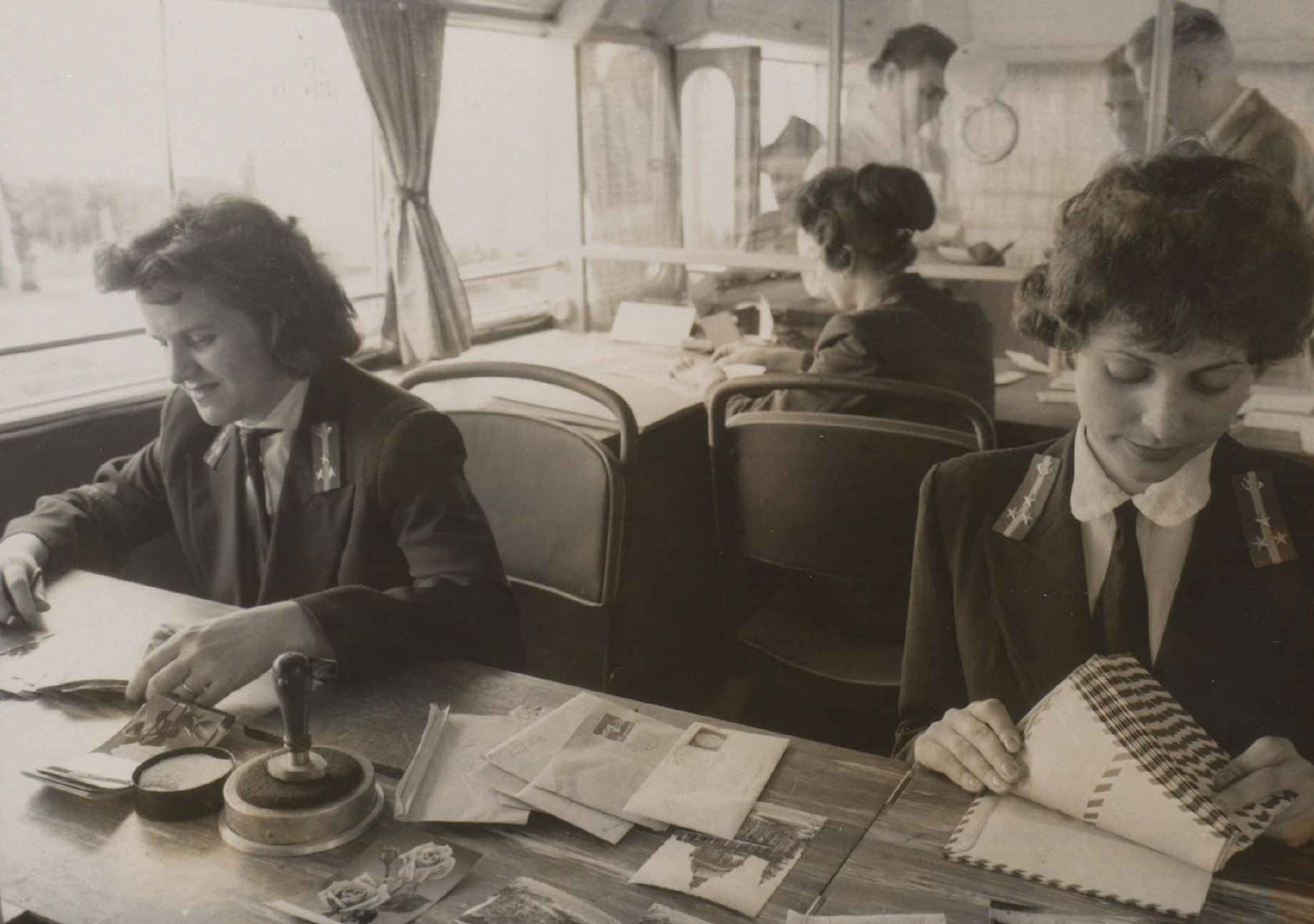
For much of postal history, women were present in the workforce but rarely visible in official records. According to Vincent Schicker, historian at the Universal Postal Union (UPU), the expansion of postal services during the nineteenth century gradually opened the door to women’s participation, although often under restrictive conditions.
Version française bientôt disponibleAn 1876 article published in Union Postale examined the role of women in postal administrations worldwide. The piece provided a revealing snapshot of the era. Around 5,000 women worked in the postal service in the United States, 171 in Sweden, and 424 in Switzerland, where women represented a minority among the country’s 5,355 postal employees. Yet many countries still barred women from postal employment or imposed strict conditions on their participation.
For Schicker, these historical examples reveal a broader pattern: the story of women in the postal sector is one of gradual access, resistance and eventual transformation.
Entering the postal workforce
Schicker explains that, as postal administrations modernized, they became increasingly attractive employers for women seeking financial independence and social mobility. In France, for example, postal employment was considered one of the few respectable professions available to women from lower‑middle-class families.
He points to a striking figure from 1894, where 5,500 women applied for just 400 positions within the French postal and telecommunications administration. “The numbers themselves show how sought‑after these positions had become,” he notes.
At the same time, women’s opportunities remained tightly controlled. Schicker highlights how many postal administrations imposed restrictions based on marital status or age, while others confined women to duties considered socially acceptable for them. In countries such as Bavaria, Luxembourg, Egypt, Russia, the Netherlands and Norway, women were either excluded from postal work altogether or confined to limited functions considered “appropriate” for them.
The first roles women occupied
According to Schicker, the earliest roles available to women reflected the social attitudes of the period. Women were largely directed toward clerical and administrative work such as secretarial duties, typing, translation and counter services.
The 1876 Union Postale article explained that women were considered unsuited to strenuous work and were instead directed toward occupations requiring “delicacy”. Telephone operators became one of the most emblematic examples. “Women were recruited because their voices were considered more pleasant and reassuring,” Schicker explains, noting that young men employed in similar roles were often perceived as too rowdy or ill-mannered for customer interactions.
Such views illustrate how gender stereotypes shaped recruitment practices and the division of labour within postal administrations. Women were also commonly paid less than their male counterparts, reflecting broader inequalities in the workforce at the time.
Schicker also notes how office technologies changed women’s relationship with work. In many households, the typewriter gradually replaced the piano as a symbol of feminine education and preparation for professional life. Yet even as women entered the workforce in larger numbers, social expectations surrounding marriage and motherhood continued to limit their careers.
Women step into new postal roles during wartime
For Schicker, the two World Wars represented major turning points in women’s place within postal services.
“As men left for military service, women stepped into operational positions that had previously been closed to them,” he explains. Women delivered mail, worked in sorting facilities and ensured continuity of postal operations during periods of immense disruption.
Although many women were later expected to leave these roles when men returned from the front, Schicker argues that perceptions had permanently shifted. Women had demonstrated that they could perform physically demanding and operationally critical tasks just as effectively as their male colleagues.
He points to the hiring of Switzerland’s first female PostBus driver in 1971 as a symbolic example of this gradual expansion beyond clerical functions.
Resistance and stereotypes in the workplace
Schicker notes that women entering postal administrations often encountered suspicion and resistance from male colleagues. Postal services, like many public institutions of the time, had long been male‑dominated environments.
“The arguments used against women were often contradictory,” he explains. Women were criticized for supposedly lacking physical strength or authority, while simultaneously being praised for qualities such as patience, dexterity and delicacy that were associated with clerical work.
These stereotypes persisted well into the twentieth century and mirrored attitudes found across other industries. Women were frequently perceived as suitable for repetitive or delicate work, but not for positions involving authority or operational responsibility.
For Schicker, these tensions reflected broader social attitudes toward women in the workplace during the late nineteenth and early twentieth centuries.
Women rise to leadership
Despite these barriers, women gradually advanced into supervisory and management roles. Schicker points to the early existence of female “postmistresses” managing local post offices in several countries, as described in the 1876 Union Postale article.
By 1875, the United States counted 2,500 female postmistresses, while France had nearly 4,000 women overseeing local offices, often in rural communities. However, the largest and most prestigious offices remained overwhelmingly led by men.
Progress toward senior leadership positions remained slow for decades. Schicker highlights that women only gained access to management positions in Switzerland in 1972, with the country’s first female post office manager appointed in 1981. It was not until 2012 that Susanne Ruoff became the first female CEO of La Poste Suisse (Swiss Post). Similar milestones were achieved internationally by leaders such as Moya Greene at Royal Mail (United Kingdom) in 2010 and Megan Jane Brennan at the United States Postal Service in 2012.
Trailblazers who challenged the status quo
Among the stories Schicker finds most striking is the response written by an anonymous Swiss postal employee shortly after the publication of the 1876 Union Postale article.
“She answered many of the stereotypes of the time with irony and remarkable clarity,” he explains. The employee argued that if women were considered capable of managing large households and supervising domestic staff, they should also be considered capable of managing post offices. She also pointed out that men, too, could be absent from work owing to illness or personal behaviour.
Schicker also highlights the gradual appearance of women within the UPU’s own history. At the 1885 Lisbon Congress, a woman from the Portuguese secretariat appeared among the participant portraits. In 1920, Elizabeth Lee Woods joined the American delegation to the Madrid Congress, causing debate over whether a woman should even be admitted to the proceedings. At the 1934 Cairo Congress, Hélène Serebriakova of the USSR became the first female delegate admitted with full rights.
For Schicker, these examples illustrate how women progressively carved out their place within both national postal systems and the wider international postal community. Today, women occupy leadership positions across postal administrations worldwide, reflecting decades of perseverance and change across the sector.
This article first appeared in Union Postale Spring/Summer 2026.